Family-run since 2010 • Plumbing in Greater Cleveland since 1992
HVAC Contractor in Brunswick, OH
Last updated:
Gas furnace and central air conditioning repair and replacement for homes, multi-family houses and apartment buildings across Greater Cleveland.
Hours: Call for availability
What does an HVAC contractor in Brunswick, OH do?
An HVAC contractor diagnoses, repairs, replaces and installs the equipment that heats and cools a house. All-Pro Plumbing & HVAC LLC, based in Brunswick, OH, works on residential gas furnaces and central air conditioning: no-heat calls, ignition and blower faults, refrigerant and capacitor failures, full furnace and condenser replacement, and the ductwork and venting that make either one work properly. That includes single-family homes, multi-family houses and apartment buildings.
Heating and cooling in Northern Ohio houses
This climate is hard on equipment. A furnace here runs from October into April, then the same blower turns around and moves cooled air through July and August. That's a long duty cycle on one machine, and it's why the failures we see cluster in predictable places: ignition components, inducer and blower motors, control boards cooked by years of heat, and coils that never got cleaned.
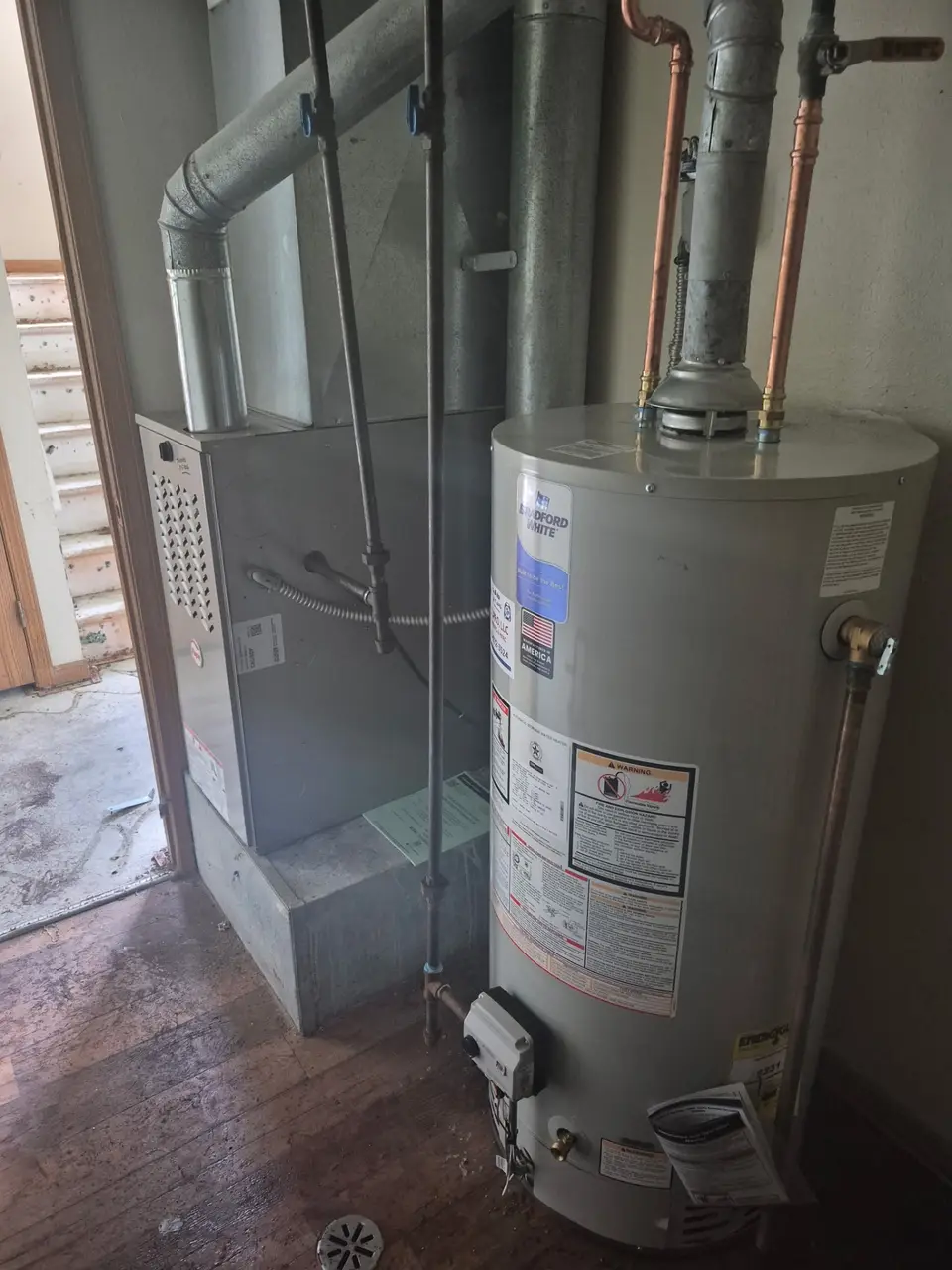
On the heating side, most homes around Brunswick, Strongsville and North Royalton run a forced-air gas furnace. The older eighty-percent units vent up a masonry chimney and are simple, sturdy things — but if the house has been through a water heater swap or a furnace upgrade, the chimney is often oversized for what's left venting into it, and that causes condensation and corrosion problems that nobody notices until a flue pipe rusts through. Newer ninety-plus condensing furnaces vent out the sidewall through PVC, which brings its own list: blocked intakes, condensate traps clogged with slime, and drain lines frozen where they exit into an unheated space.
When a furnace won't run at all, the diagnosis follows the sequence of operations. Is there a call for heat, does the inducer start, does the pressure switch close, does it spark, does the gas valve open, does the flame sensor prove the flame, does the blower come on. Any experienced tech can walk that in ten minutes with a meter. What separates a real diagnosis from a parts swap is checking the things that caused the part to fail — a filter someone hasn't changed since spring, closed registers in half the bedrooms, or an undersized return that's been starving the unit since the house was built.
Replacement is the other half of the job. When a furnace is 20 years old and the heat exchanger has cracked, we're not going to try to repair it. What we will do is size the replacement to the house rather than to the label on the old one. Furnaces got oversized for decades, and an oversized unit blasts, satisfies the thermostat in six minutes, and shuts off, leaving the far bedrooms cold and the equipment cycling itself to an early grave. We look at square footage, insulation, windows and duct capacity and put in what the house actually calls for.
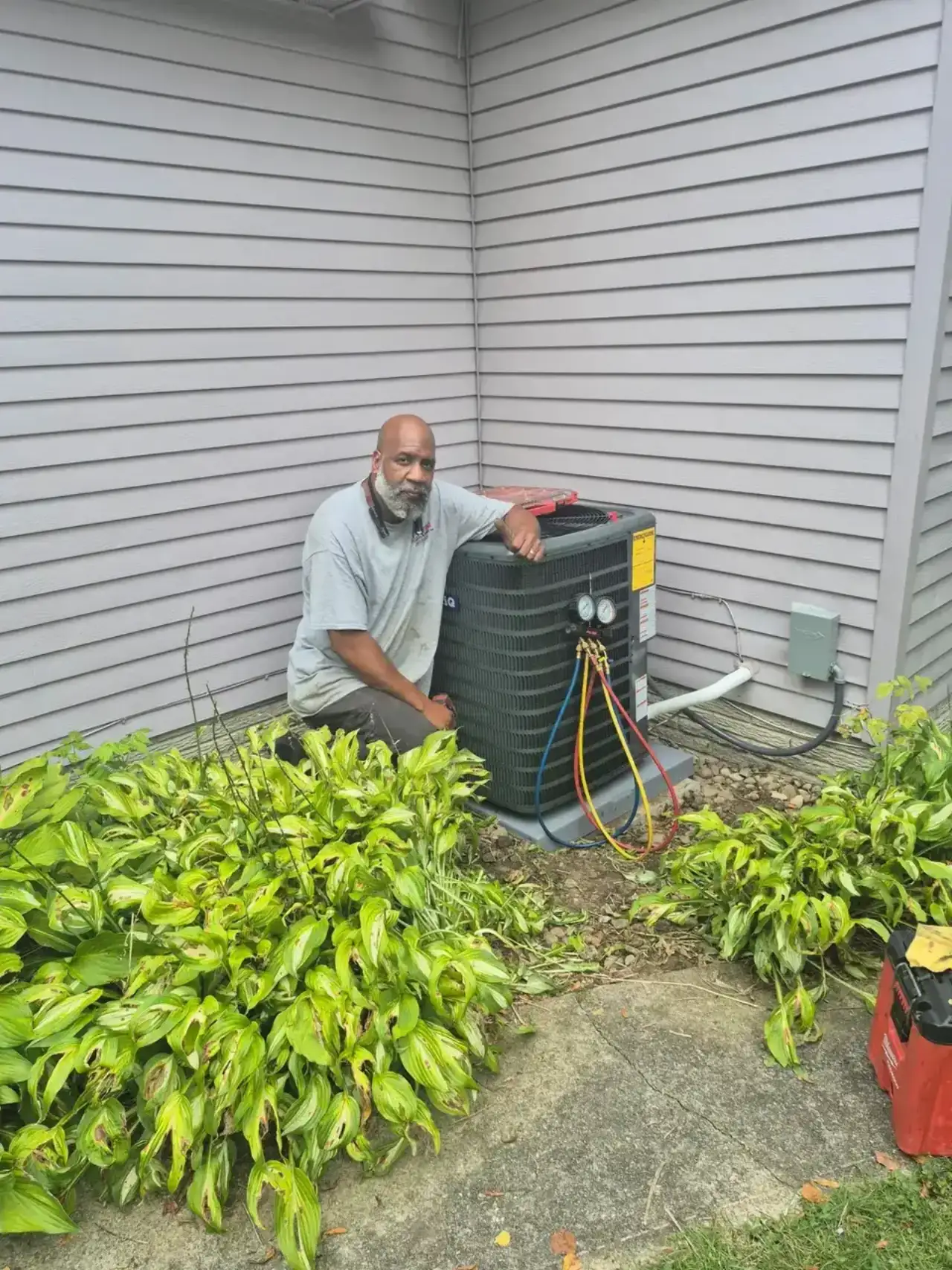
Air conditioning gets less attention here because the season is short, which is exactly why so many systems limp. Central air fails in one of a handful of ways: a capacitor that no longer has the punch to start the compressor, a contactor pitted from years of arcing, a condenser coil packed with cottonwood and grass clippings, a refrigerant leak, or an indoor coil frozen solid from restricted airflow. Same approach as heating — find the cause, tell you what it costs, then fix it. On replacement, the condenser and the indoor coil have to be matched, and if the furnace is old enough that it's coming out soon anyway, we'll say so instead of installing half a system.
Ductwork rarely gets mentioned in a sales pitch, but it decides whether any of this works. A perfectly good furnace connected to a single undersized return will never heat evenly. Where it matters we'll tell you what a return addition or a duct repair would do, and what it costs, so you can weigh it against the equipment.
Heating & cooling services
Sump Pumps
Pump swaps, check valves, discharge lines and battery backup pumps.
DetailsGas Line Repair
Leak repair after the utility shuts down, plus new lines for ranges, dryers and grills.
DetailsFurnace Repair
No heat, short cycling, ignition and blower faults on gas furnaces.
DetailsFurnace Installation
Right-sized replacement, proper venting and a return that actually breathes.
DetailsAC Repair
Warm air, frozen coils, capacitor and refrigerant issues on central air.
DetailsAC Installation
Condenser and coil replacement matched to your furnace and ductwork.
DetailsPlumbing work too — see our plumbing services, or check the towns we run in on the service area page.
Common questions
My furnace runs for two minutes and shuts off. What is that?
Short cycling like that is usually the flame sensor, a blocked flue or pressure switch, or an overheating limit trip from restricted airflow. The cheapest cause — a dirty flame sensor or a filter nobody has changed in a year — is also the most common, so that gets checked first before anyone talks about parts.
How long should a furnace last around here?
A gas furnace in a Northern Ohio home typically runs 15 to 20 years. Past that, the question is usually the heat exchanger. If it's cracked, the unit gets shut down and replaced — that isn't a repair item. If the exchanger is sound and it needs an inducer motor or a board, a repair on a 17-year-old furnace can still be reasonable money.
Do I have to replace the furnace when I replace the air conditioner?
Not always, but they're a matched pair. The indoor coil sits on top of the furnace and the furnace blower moves the air for both. If the furnace is near the end of its life, replacing both at once means one set of labor and equipment that's actually matched. If the furnace is newer, we'll size a condenser and coil to work with what you have.
Why is my AC blowing warm air but the outdoor unit is running?
Most often a frozen indoor coil from low airflow or low refrigerant, a failed capacitor leaving the compressor unable to start while the fan still spins, or a contactor issue. Shut it off, run the fan to thaw the coil, change the filter, and call. Running a system with a frozen coil is how a bad afternoon becomes a compressor replacement.
No heat, or an AC that quit in the middle of a hot week?
Call the shop. We'll get the details and get someone out to look at it.
Hours: Call for availability