Family-run since 2010 • Plumbing in Greater Cleveland since 1992
Drain Cleaning in Brunswick & Greater Cleveland, OH
Last updated:
Clogs don't wait for a good day. Kitchen, bathroom, main line or sewer — we'll run the cable, camera the line, and tell you what actually caused it.
Hours: Call for availability
Tell us what's clogged
Tell us what the house is doing and we'll call you back to set a time. Hours: Call for availability.
How much does drain cleaning cost in the Cleveland area?
A standard drain cleaning for a sink, tub, or laundry line in Greater Cleveland typically runs $125 to $275. A main sewer line cleanout with a cable and camera is usually $250 to $600. Hydro jetting a larger line or a grease-packed commercial kitchen line can land higher, depending on access. Those are market-typical ranges, not a fixed quote — the real price depends on the length of the run, the access, and what's in the pipe.
Drains we clear in Northeast Ohio homes
Most houses we work on in Brunswick, Medina, Strongsville, and North Royalton were built between the 1950s and the 1990s, which means a mix of cast iron, copper, galvanized, and PVC. That mix matters because the same clog behaves differently in each pipe. Our first question is always where the backup is showing, because that tells us whether it's a branch drain or the main.
Kitchen drains
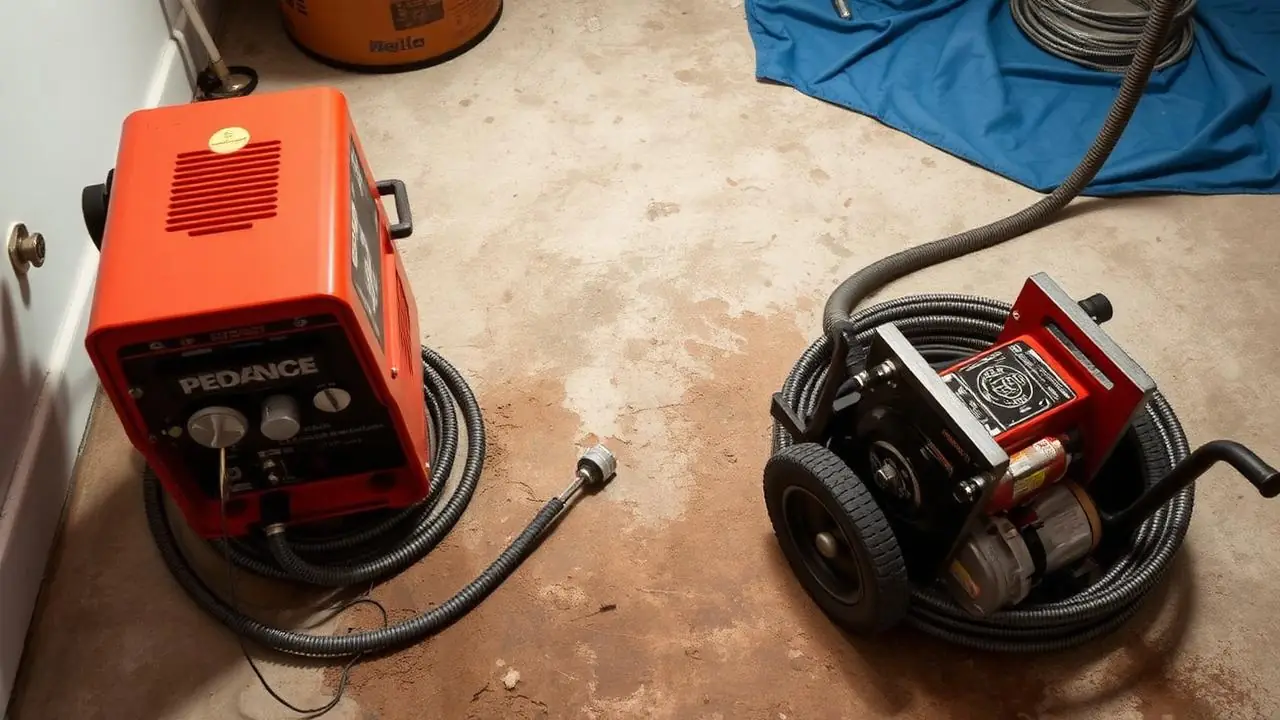
Grease, soap, and food scrapings are the usual culprits. A kitchen sink that drains slower and slower is usually building a plug in the horizontal line before it hits the stack. A cable with a grease-cutting head or a small jetter clears it and gets the garbage disposal breathing again.
Bathroom sinks, tubs & showers
Hair and soap form a solid mat just past the pop-up or inside the trap. We can pull most of it with a small cable or clean the trap by hand. If the clog is further down the branch, we run a cable and camera to make sure the line isn't bellied or cracked.
Main sewer line
The big one. A backed-up main means sewage has nowhere to go. We cable from an accessible cleanout — often a cast-iron fitting in the basement floor — and use a camera afterward to find the cause. Roots, sagging pipe, and separations in old clay laterals are common around Brunswick and Medina.
Floor drains
Basement and utility-room floor drains are low points in the system. When the main is slow, they show it first. They also collect sediment, lint, and concrete chunks from old construction. A cable and a quick flush usually restore them.
Laundry drains
Washing machines dump a lot of water fast. A standpipe that gurgles or overflows usually means a partial blockage in the line or a venting problem. Lint is harder than people think — it packs together and catches on rough pipe edges, especially in old galvanized.
Snaking vs. hydro jetting: which one do you need?
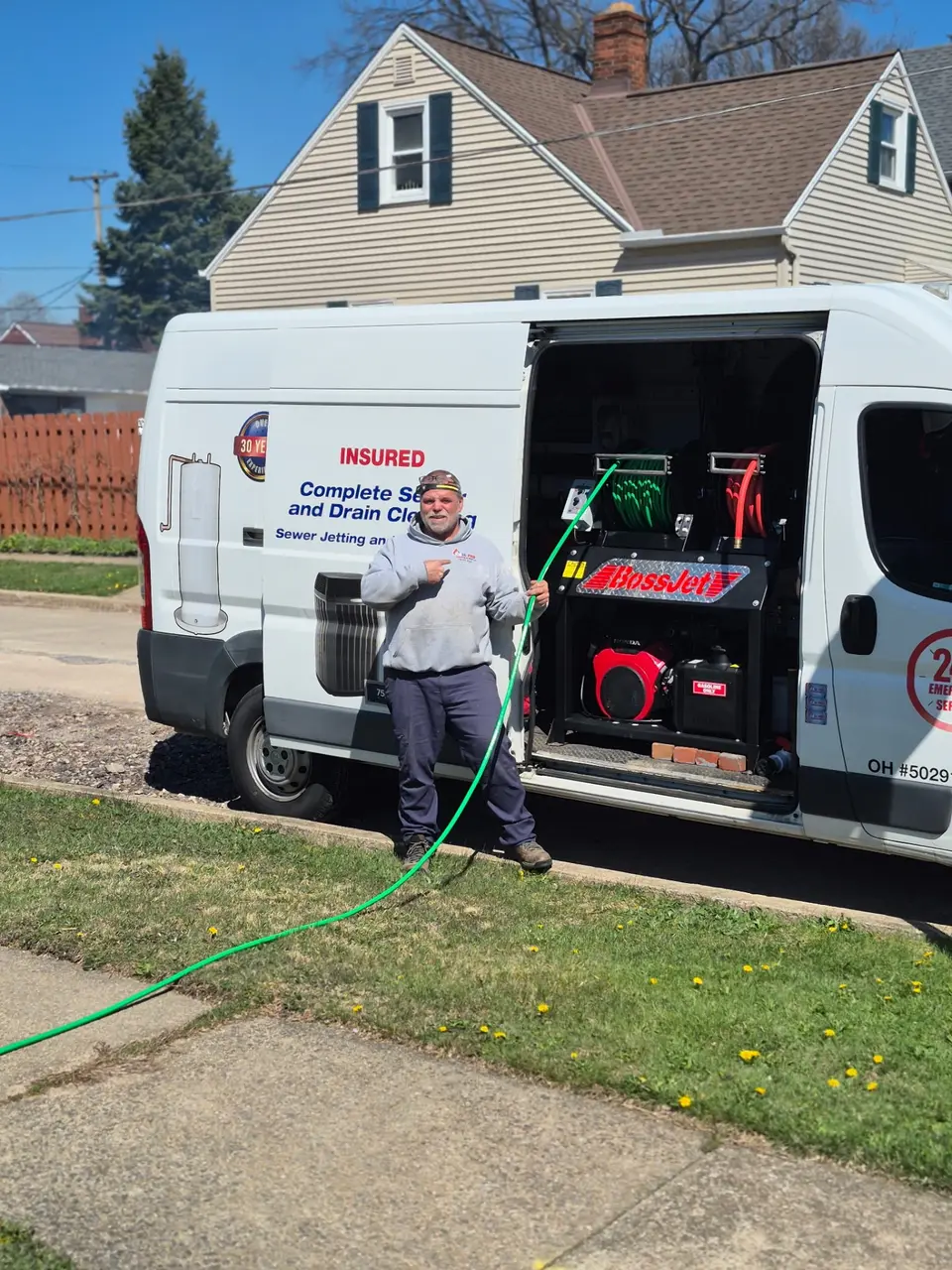
Both open a drain, but they solve different problems. A snake makes a hole through a clog. A jetter scrubs the pipe wall. We pick the tool based on the pipe material and the cause, not the slogan on the truck.
| Drain snake | Hydro jetting |
|---|---|
| Best for hair, paper, food, and soft blockages | Best for grease, scale, and root intrusion |
| Opens a path through the clog | Cleans the full diameter of the pipe |
| Safe for old cast iron and clay with a camera first | Needs sound pipe; can damage cracked or thin-wall lines |
| Lower cost and faster for most household clogs | More thorough, but takes longer and costs more |
| Good first try for a single slow drain | Better follow-up if a clog keeps coming back |
We don't jet a line we haven't seen. If the pipe is old, cracked, or has a belly, high pressure water can make it worse. A camera inspection is cheap insurance before a jetter.
Why drains clog in older Cleveland-area homes
The housing stock south of Cleveland is full of the same materials: cast-iron stacks with rough interior walls, galvanized branch lines that scale up from the inside, and clay sewer laterals under mature trees. Each one creates its own kind of clog.
Cast iron doesn't corrode evenly. It develops nodules and rough spots that catch paper and grease, and the bottom of the pipe can build a layer of sludge that never fully washes out. A drain that used to flow fine in 1995 is now a third narrower on the inside, and it takes less and less to plug it.
Galvanized steel branch lines are worse. The zinc coating wears away, the steel rusts, and the pipe actually shrinks from the inside. A galvanized kitchen drain that was originally 1.5 inches might be closer to 1 inch by the time we see it. That's why "everything goes down slow" is almost always a pipe problem, not just a clog.
On the sewer side, clay pipes shift with the freeze-thaw cycle, and the joints separate. Tree roots find the gap and fill the pipe with fine hair roots that catch everything you flush. A cable clears the roots temporarily, but the real fix is either a spot repair or a full lateral replacement. We camera the line so you know which one you're dealing with.
If the camera shows a belly, a break, or heavy root intrusion, we'll point you to our sewer line work — sewer line repair and replacement is the next step once the drain itself won't stay open.
What you can try before you call
There's no shame in trying the easy stuff first. A slow bathroom sink is often hair wrapped around the pop-up stopper. A slow tub is the same story, just further down the trap. Pull the stopper, clean it, and see if that fixes it. A plunger on a sink with the overflow hole blocked can also clear a soft clog near the top.
A single clogged toilet that doesn't respond to a plunger usually needs a closet auger, which is a short cable designed for a toilet trap. We carry one on every truck. If you don't have one, it's worth the call rather than forcing a regular snake down the porcelain.
Chemical cleaners are where most homeowners go wrong. They rarely open a main line, they can eat the finish off a sink, and they make it dangerous for a plumber to run a cable afterward. The fumes are real, and the chemicals don't know the difference between your clog and your old galvanized pipe. If the first try doesn't work, put the bottle down.
If more than one fixture is backing up at the same time, or water is coming up a floor drain, the problem is past the branch drains. Stop running water and call. The longer a main line clog sits, the more it backs up into the lowest drain in the house.
What neighbors say
Reviews go here as they're verified. We don't post anything we can't trace back to a real address and a real invoice.
Drain cleaning questions
What is the difference between snaking and hydro jetting?
A drain snake — a cable with a cutting or grabbing head — clears a path through a blockage and is the right tool for hair, paper, and most kitchen clogs. Hydro jetting uses high-pressure water to scour the full pipe diameter, which is better for grease buildup, scale, and roots. Not every old line can handle jetting, so we camera first if we're not sure.
Can I use a chemical drain cleaner?
Once in a while on a slow bathroom sink, maybe. In a kitchen drain or a main line, chemicals are usually a waste of money and they can damage older cast iron, corrode galvanized, and make it dangerous for the next person to run a cable through the pipe. If the first bottle doesn't work, stop pouring and call. The cable clears the clog without guessing.
How do I know if it's a main line clog?
Multiple fixtures backing up at once is the big sign — the toilet bubbles when the washing machine drains, or the basement floor drain shows water when you flush upstairs. A single slow sink is almost always a branch drain. A main line clog is a sewer problem, and the fix needs a cable from an accessible cleanout, not a plunger.
Do you clean outdoor drains and downspout lines?
Yes. Underground downspout drains in older Cleveland suburbs get packed with shingle grit, leaves, and sometimes root intrusion. If your gutters overflow and the downspout is buried, the line itself is the likely problem. We can cable those and let you know whether the line is still sound.
Drain running slow or not at all?
Call and tell us what's backing up. We'll say whether it needs a cable, a jetter, or a camera first.
Hours: Call for availability