Family-run since 2010 • Plumbing in Greater Cleveland since 1992
Furnace Installation & Replacement in Brunswick, OH
Last updated:
New furnace, sized for your house and the way Cleveland winters actually work. No canned copy — just a load calc, an honest choice, and an install that doesn't leak heat or money.
Hours: Call for availability
Get a replacement quote
Tell us what the house is doing and we'll call you back to set a time. Hours: Call for availability.
How much does a new furnace cost installed in Northeast Ohio?
Most complete gas furnace replacements in the Cleveland area run between about $3,500 and $7,500 installed, depending on the size, efficiency tier, and how much ductwork or venting work the house needs. An 80% furnace on existing venting is at the lower end; a 96% two-stage unit with new PVC venting is at the higher end.
Buying a furnace isn't like picking a refrigerator. The box itself is only part of the job. The right furnace for a 1960s ranch in Parma, with original ductwork and a single return, is different from the right furnace for a 2005 Brunswick colonial with a finished basement and a well-sealed envelope. And it's not just the square footage — insulation, windows, air leakage, and how the house faces the wind all matter.
The same load calculation applies whether we're doing a furnace replacement in Medina, a first-time gas furnace installation in a Brunswick addition, or a heating system replacement in a North Royalton ranch. The houses change, the math doesn't.
We start with a Manual J load calculation. That's the industry standard for sizing heating equipment, and it's what separates a proper install from a guy walking around with a tape measure and a rule of thumb. Manual J looks at wall area, insulation levels, window quality, air changes per hour, the local design temperature, and the existing duct capacity. In our area, the design temperature is around zero degrees — meaning the furnace is sized to keep the house warm on a cold night, not just on a cool day.
The older housing stock south of Cleveland throws a wrinkle into that math. A lot of these homes were built with 2x4 walls, minimal insulation, single-pane windows, and enough gaps to move air through the framing. The load calc tells us the house needs a lot of BTUs — but the ductwork may not be able to carry them. In that case, the answer isn't always a bigger furnace. Sometimes it's sealing, insulating, and adding return capacity so the furnace you already have can actually do its job. We don't sell you more fire when the real problem is the chimney.
Signs it's time to replace
No single symptom means replace. But when a few of these line up, throwing more money at repairs is just a slower way to buy a new furnace.
Age over 15 years
The average life out of a residential gas furnace in this area is 15–20 years, but that's if it's been maintained and never over-stressed. A 17-year-old unit that already has a heat exchanger issue is done. We won't put a bandage on it and call it good.
Repair cost over half of replacement
Blower motor, control board, and inducer assembly repairs add up fast. When a single repair is creeping past half of what a new furnace costs, the math starts to favor replacement — especially if other parts are wearing too.
Frequent breakdowns
Two or more no-heat calls in two winters means you're buying a new furnace one piece at a time. You're also getting cold, paying diagnostic fees, and losing the warranty coverage a new unit brings.
Heat exchanger problems
A cracked heat exchanger is the end of the conversation. Carbon monoxide can leak into the supply air. We do not patch, seal, or quote repairs on that — we shut it down and replace it. Period.
Rooms that never get warm
Uneven heating can be a duct problem, but it's also the sign of an undersized or dying furnace that can't produce enough heat to push to the far rooms. If the ductwork checks out and the unit still can't keep up, replacement is the fix.
Gas bills climbing while usage stays the same
Older furnaces lose efficiency and run longer cycles to deliver the same heat. If the insulation hasn't changed and the gas company hasn't raised rates, the furnace is the likely culprit.
How we size a furnace for Cleveland winters
Sizing is not about matching the old furnace's BTU rating. Half the furnaces in this area are oversized because somebody thirty years ago picked one that could heat the house with the windows open. Oversized furnaces short-cycle, run up gas bills, wear out faster, and leave rooms cold where the ductwork can't keep up. They also create comfort problems the new unit will inherit unless we measure the house first.
A Manual J load calc measures how much heat the house loses on the coldest design day — for Cleveland, that's roughly zero degrees with a modest wind. We look at wall area and R-value, attic insulation depth, window type and orientation, air leakage, and the duct system's ability to move the resulting airflow. The output is a heat loss number in BTUs per hour, which tells us the furnace capacity needed to hold temperature at design conditions.
Then we compare that number against the ductwork. The furnace might be able to make 80,000 BTUs, but if the return grille is undersized and the supply trunk was built for a 60,000 BTU unit, the new furnace will trip limits and overheat. In older homes around Medina, Strongsville, and North Royalton, we see this constantly. The fix might be adding a return, sealing the trunk, or insulating the basement ductwork before the furnace is even rolled in. A proper installer does that math out loud, not after the unit is wired and running.
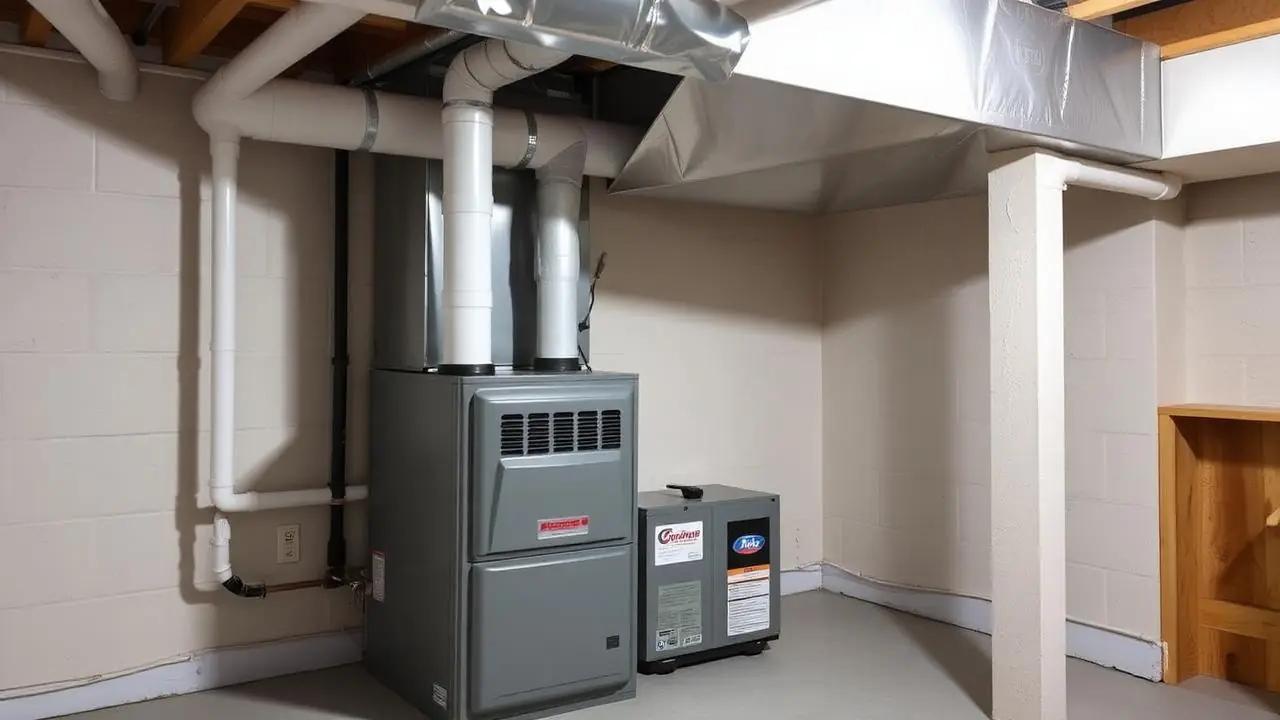
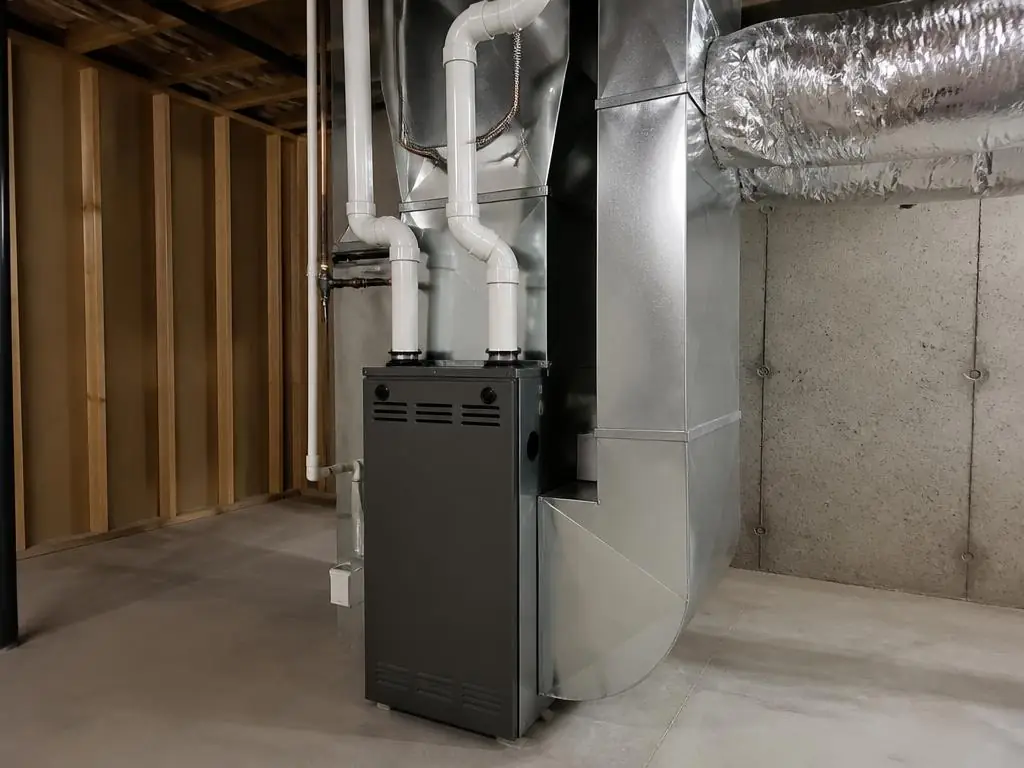
We also check the venting. An 80% furnace uses the existing metal chimney or B-vent. A 96% furnace is a sealed-combustion unit that needs two PVC pipes to the outside, and it drains condensate. That changes where the unit can live, whether the condensate pump is needed, and how the combustion air is handled. The right choice depends on the basement, not just the brochure.
80% vs. 96% AFUE in Northeast Ohio
AFUE is the efficiency rating — how much of the gas gets turned into usable heat. For our winters, the choice between 80% and 96% is a math problem, not a status problem.
| What to compare | 80% AFUE furnace | 96% AFUE furnace |
|---|---|---|
| Upfront installed cost | Lower. Uses the existing metal chimney or B-vent in most cases, so less labor and material. | Higher. Requires PVC intake and exhaust, condensate drain routing, and often a new termination through the wall or roof. |
| Gas bill impact | 20 cents of every gas dollar goes up the flue. In a leaky house, that loss is noticeable but partly masked by the drafts. | 4 cents of every gas dollar is wasted. Real savings show up in a tight, well- insulated home with reasonable ductwork. |
| Best fit | Tight budgets, short-term ownership, or houses where the chimney is still in good shape and the ductwork can't justify a premium spend. | Long-term owners, well-sealed newer homes, or anyone planning to stay long enough for the gas savings to pay back the extra upfront cost. |
| Venting requirements | Can use the existing chimney if it's properly sized and lined. A common source of problems on older masonry chimneys. | Sealed combustion, so it pulls its own air from outside and doesn't rely on the chimney. Cleaner and safer, but needs new pipe runs. |
If the furnace is still repairable and you're not sure which side of the line you're on, here's what repairs look like: furnace repair.
What an installation day looks like
Before the truck shows up, we pull the permit if your municipality requires one — Brunswick, Medina, and most of the surrounding towns do. We shut off the gas and power, pump down or isolate the refrigerant if the AC coil is staying, and drain the old furnace. Removal is usually the first hour. The duct plenum gets cut, resealed, and reattached to the new cabinet, with a proper filter rack so the homeowner isn't forced to buy odd-sized filters for the next twenty years.
The new furnace gets set level, wired, and gas-piped. If it's 96% AFUE, we run the PVC intake and exhaust to a sidewall or roof termination, install the condensate drain or pump, and test the combustion with a digital analyzer. If it's 80% AFUE, we inspect the chimney or B-vent for sizing and condition. Then we pressure-test the gas line, run the heating sequence, check temperature rise, and verify every room is getting airflow.
We don't leave until the thermostat is programmed and you know how to change the filter. The permit gets finalized, and the manufacturer's warranty is registered. A replacement done right is quieter, cheaper to run, and doesn't leave you wondering if the job is going to pass inspection.
What to ask any installer before you sign
A furnace is a big-ticket item, and most homeowners only buy one or two in a lifetime. The difference between a good install and a bad one usually shows up three years later, not on day one. So before you write the check, ask how they're sizing the unit. If the answer is "we'll match what's in there" or "one ton per five hundred square feet," that's not a sizing method — it's a guess. A proper replacement should include a written load calculation and a discussion of whether the ductwork can move the air the new furnace needs.
Ask what the quote covers. Is the permit included? Are there extra charges for a new return drop, filter rack, condensate pump, or gas line modification? Will they handle the warranty registration, or does that fall on you? Are they pulling and replacing the old thermostat, or expecting you to use the one that came with the house in 1998? A vague quote with a low number usually becomes a much higher number once the truck is in the driveway.
Ask who does the follow-up. Will the same crew come back if the temperature rise is off or a room isn't heating? Do they guarantee the work, or just the parts? A warranty card from a manufacturer is not the same as an installer's workmanship guarantee. We register the equipment, check the job in person, and if something isn't right after the first cold snap, we'll come back and make it right. That's the part of the job you can't put on a price tag.
Work in the neighborhood
Job photos and verified customer reviews go here as they come in. We don't put anything on the site we can't connect back to a real address and a real invoice.
Furnace installation questions
How much does a new furnace cost installed in Northeast Ohio?
Most complete gas furnace replacements in the Cleveland area run between about $3,500 and $7,500 installed, depending on the size, efficiency tier, and how much ductwork or venting work the house needs. An 80% furnace on existing venting is at the lower end; a 96% two-stage unit with new PVC venting and a humidifier is at the higher end. That's a typical market range, not a firm quote — the actual number comes from the house, not a website price list.
Is a higher AFUE furnace worth the extra money in Ohio?
It depends on how long you plan to stay and how tight the house is. A 96% furnace pulls more heat out of the same gas input, but the real savings come only if the house holds the heat. In a drafty older ranch with marginal insulation, the efficiency gain gets leaked right back outside. In a newer Brunswick or Medina build with good windows, the numbers look better. We run both options side by side so you can see the payback before you choose.
How long does furnace replacement take?
A straightforward swap of the same type of furnace on an existing return and supply is usually one day in the basement. If we're moving from 80% to 96% efficiency, we need to run new PVC intake and exhaust, and sometimes relocate the condensate drain — that can add half a day. Complicated ductwork changes, a crawlspace location, or a safety correction on the gas line can push it into a second day. We'll tell you what your job looks like before we start, not after we're half done.
Can you replace a furnace someone else installed?
Yes. We replace furnaces that were installed by us, by other contractors, and by builders who never expected the unit to last 25 years. We'll inspect the venting, gas line, electrical, and return/supply sizing before we commit to a like-for-like replacement. If the original install left you with an undersized return or a chimney that's too big for the new furnace, we'll lay that out and price the correction.
What furnace brands do you install?
We install the major residential lines — Carrier, Trane, Lennox, Goodman, Rheem, Bryant, American Standard, and York among them. The brand matters less than the match: the right size, the right blower, and a venting arrangement that works with the chimney or sidewall. A poorly installed premium furnace will outlast a well-installed cheap one only on paper. We stand behind the install, not the badge.
Ready for a new furnace?
Call and we'll walk through the load calc, the options, and a real installed price. Or send the details and we'll call you back.
Hours: Call for availability