Family-run since 2010 • Plumbing in Greater Cleveland since 1992
Pipe Repair & Repiping in Brunswick, OH
Last updated:
Burst pipes, pinhole leaks in copper, and galvanized supply that has rusted closed. Repaired properly, or replaced when repair is just buying a few months.
Hours: Call for availability
Tell us what the pipe is doing
Tell us what the house is doing and we'll call you back to set a time. Hours: Call for availability.
Should a leaking pipe be repaired or replaced?
Repair a single failure on otherwise sound pipe. Replace the run when the material itself is what failed. One pinhole in copper that has been fine for thirty years is a repair. A third pinhole on the same horizontal run in two years is that run telling you it is done. Galvanized steel that has closed up enough to kill your upstairs pressure cannot be repaired back to full flow at all — the restriction is the entire length of pipe, not one spot. We will tell you which of those you have, and why, before anything gets cut.
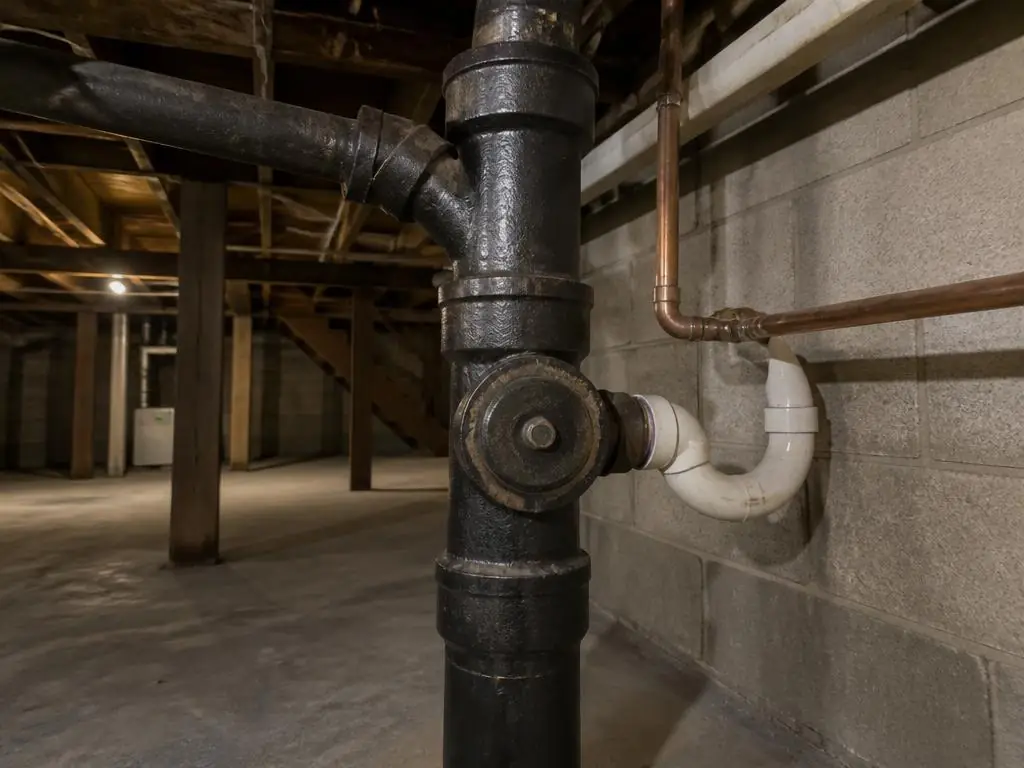
Northeast Ohio housing stock makes this a common call. The postwar neighborhoods in Parma, Garfield Heights and Maple Heights are full of galvanized supply that is now seventy-plus years old. Century homes in East Cleveland and Akron have galvanized and early copper both. The newer subdivisions in Avon and south Brunswick are on PEX and CPVC, where failures cluster at fittings rather than along the pipe.
Winter adds the other half of the work. Runs in exterior walls, crawl spaces and unheated garages split during a hard freeze and then leak on the thaw, which is why the call usually comes a day after the cold snap rather than during it.
Whatever the material, the sequence is the same: stop the water, find the real failure point rather than the spot where it dripped through, and give you a straight answer about repair versus replacement.
Pipe materials we work on
Copper
Pinhole and pitting repair, re-sweating failed joints, and replacing thin-wall runs that keep springing new leaks.
Galvanized steel
The pressure problem. Rusted-closed supply lines replaced with copper or PEX, usually starting with the branch that is worst.
PEX
Fast repairs and full repipes. Fewer concealed joints, better freeze tolerance, and less labor through finished framing.
CPVC and poly
Cracked or brittle plastic supply repaired or converted over, including the fittings that tend to fail first.
Pipe work we do
Emergency burst pipe repair
Water shut down first, then the split section cut out and replaced. We get the house back on water the same visit wherever the wall allows it.
Pinhole leak repair
The failed section replaced rather than clamped, plus an honest read on whether the rest of that run is going the same way.
Frozen pipe repair
Thawing, locating the split, and repairing it — then insulating or rerouting the run so the same spot does not do it again next January.
Whole-house repiping
Supply lines replaced end to end in copper or PEX, staged so the house is not without water overnight.
Water main and service line
Repairs between the meter and the house, including the section under the basement floor where old galvanized tends to give out.
Multi-family risers
Shared supply work in two- and three-family houses and apartment buildings, planned around tenant shutoff time.
How a pipe repair goes
1. Stop the water
On an active leak that is the whole first move. If you have not found the main shutoff yet we will talk you to it on the phone.
2. Find the actual failure
Water travels along joists before it drops, so the wet ceiling is often nowhere near the split. We open the smallest access that lets us see the real source.
3. Repair or replace, and say which
You get told whether this is one bad section or a run that is failing, with the reason, before we start cutting.
4. Test and close up
Pressure restored and every joint checked wet before we leave. Cleanup included.
How much does repiping a house cost?
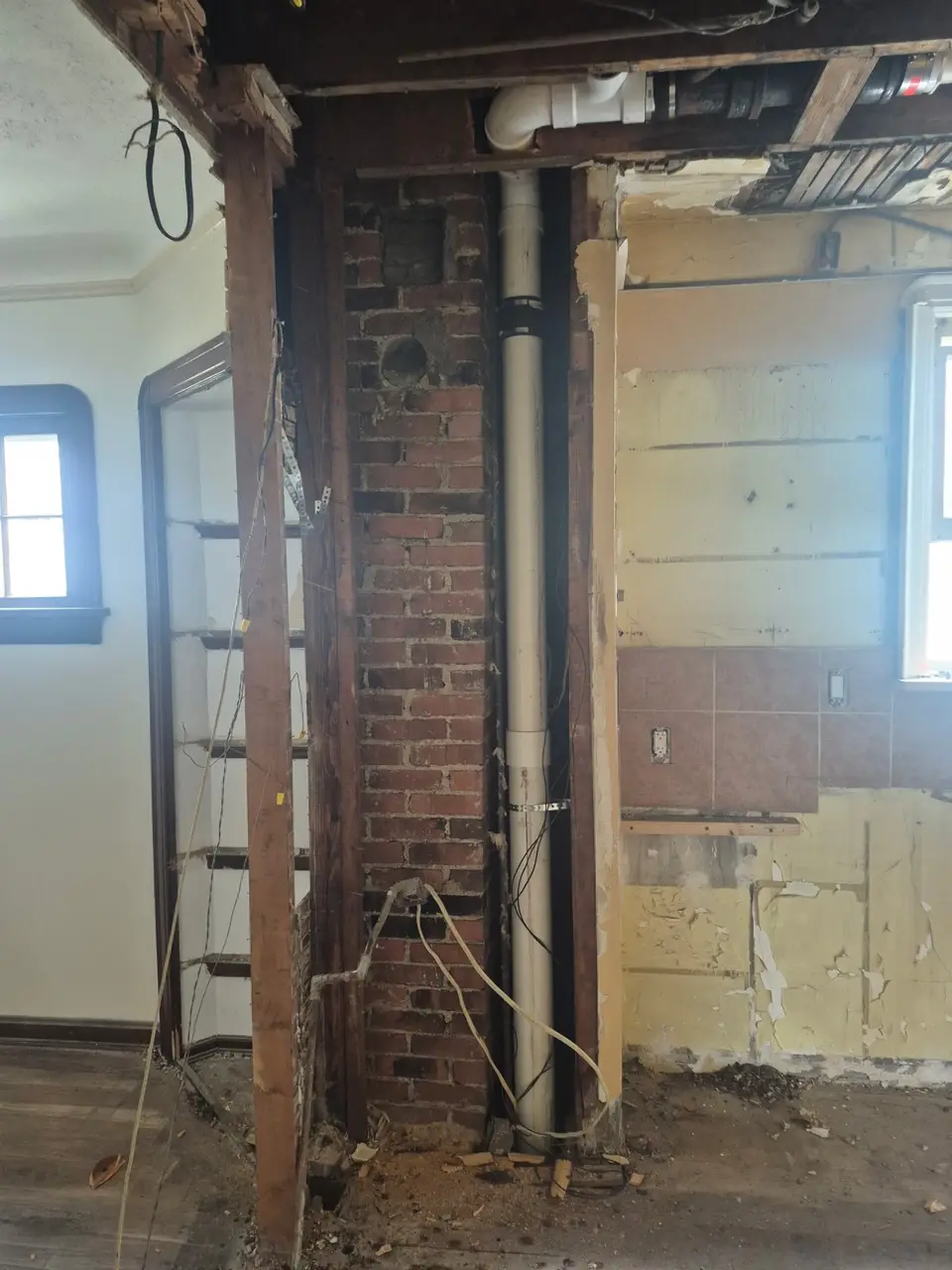
It depends on the number of fixtures, the material you choose, and how much finished wall and ceiling has to be opened to get at the runs. A house with an open basement and a straightforward layout costs meaningfully less than the same square footage with finished space under every run. We price the job after seeing it, in writing, and we break out what is repair and what is replacement so you can decide how much to do at once. Nobody gets a whole-house repipe quote over the phone.
Related work: emergency plumbing when it is actively leaking, water heaters when the leak is at the tank instead of the pipe, and sewer line repair for the drain side of the house.
Pipe repair questions
Why is my water pressure bad upstairs but fine in the basement?
In a house with galvanized steel supply, that is almost always the pipe and not the fixture. Galvanized rusts from the inside out, and the opening closes up gradually until the second floor gets whatever is left after gravity. Replacing an aerator will not fix it. We cut a short section out and show you the inside diameter — once you see it, the decision usually makes itself.
What causes pinhole leaks in copper pipe?
Pitting corrosion. It shows up most often on horizontal runs of thin-wall copper, sometimes helped along by water chemistry, high velocity from an undersized line, or old flux left at the joints. The important part is that pinholes are rarely a one-time event. If we find a second one on the same run, patching each hole as it appears costs more over a couple of years than replacing the run.
Can you repair one section, or does the whole house need repiping?
Both are legitimate, and which one you need depends on what we find. A single failure on otherwise healthy copper is a spot repair, done the same visit. Repeat failures on the same material, or galvanized that is closing up everywhere, is a repiping conversation. We will tell you which one you are looking at and we do not quote a whole-house repipe for one bad elbow.
Do you use copper or PEX for repiping?
Either. PEX is faster to run, has fewer joints inside walls, tolerates a freeze better, and costs less in labor because it snakes through framing instead of needing a fitting at every turn. Copper is still the right call for exposed runs, near vent connections and where a homeowner simply prefers it. We will price both if you want to compare.
A pipe burst and water is running right now. What do I do first?
Shut the water off before you call anybody. The main shutoff is usually on the street side of the basement wall near where the line enters, often just ahead of the meter. Turn it clockwise until it stops, then open a low faucet to drain the pressure. Once the water has stopped, call (216) 972-3524 and we will handle the repair.
Do frozen pipes always split?
No, but they split more often than people expect, and the leak usually shows up when it thaws rather than while it is frozen. The runs at risk here are the ones in exterior walls, crawl spaces, unheated garages and along rim joists. If a fixture stopped running during a cold snap and later started leaking, the split happened during the freeze.
Do you do pipe work in apartment buildings and rentals?
Yes. Multi-family is a good share of what we do. On a shared riser the first questions are which units sit on that stack and where the isolation valve actually is, so we can get the building back on water without shutting down every apartment for the day. Owners and property managers get a written scope.
Leaking pipe, or pressure that keeps getting worse?
Shut the water off, then call and describe it. We'll tell you whether it's one section or the run.
Hours: Call for availability